Are You Rescue Ready? Why Every Homeschool Family Should Make Emergency Preparedness a Priority
By Des Moines CPR · November 14, 2026 · Life Skills, Extracurricular, Science, Certifications/Trainings
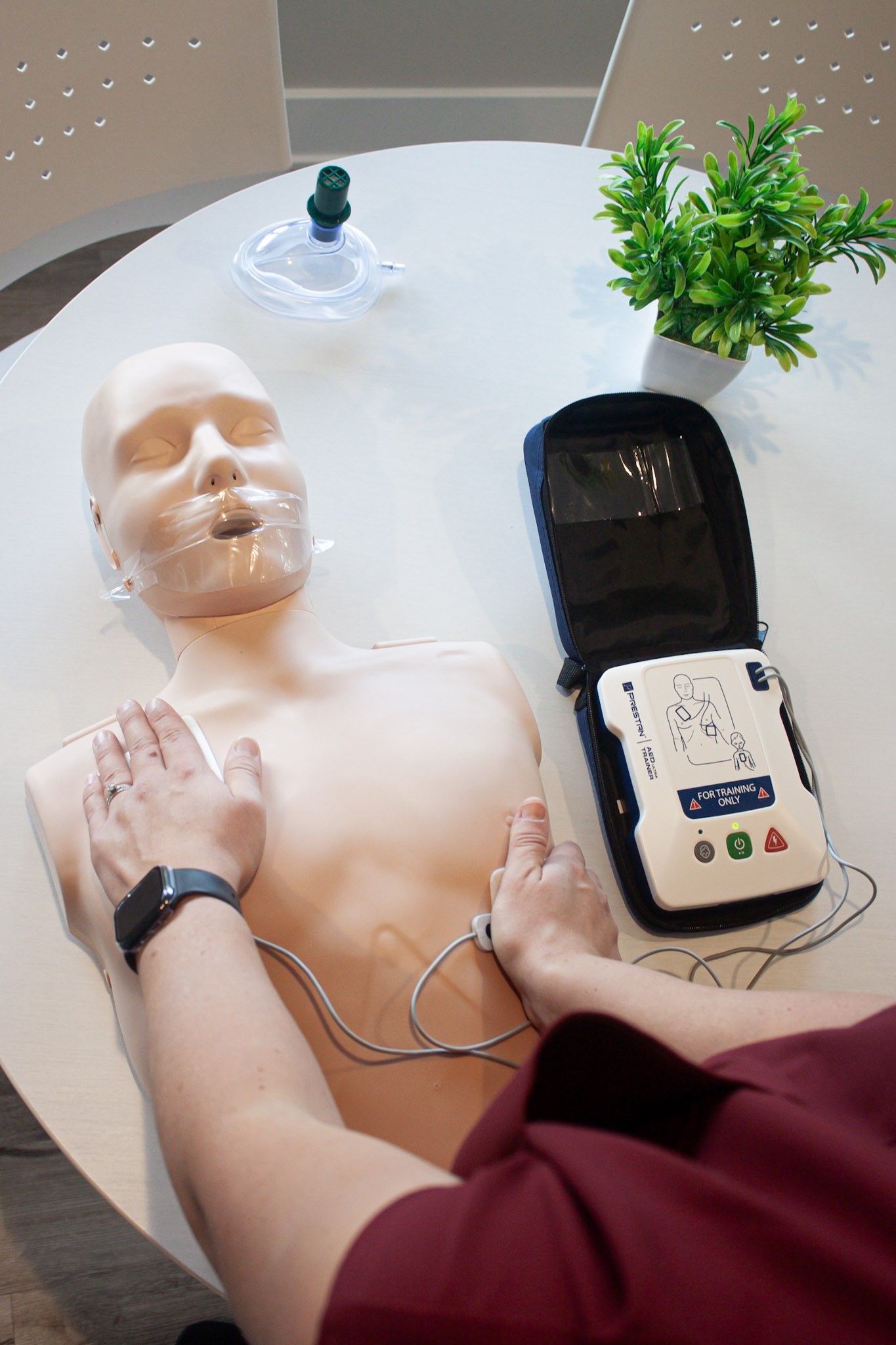
As homeschool parents, we spend countless hours teaching our children skills they will use throughout their lives. We teach them to read, write, solve problems, think independently, and care for others. We teach them how to cross the street, swim safely, and recognize potential dangers. But have we taught them what to do when someone suddenly collapses? Do they know how to call 9-1-1? Could they find an AED in a public building? Would we, as parents, feel confident stepping in to help someone experiencing a life-threatening emergency? These are important questions, and they are the reason every family should consider becoming Rescue Ready.
Emergency preparedness isn't just for healthcare professionals, first responders, or adults. It is something we can begin teaching our children at a young age, and it is one of the most valuable life skills we can give them.
The Statistics: Why Being Prepared Matters
Out-of-hospital cardiac arrest (OHCA) is a medical emergency that can happen anywhere, at any time. It can happen at home, at a playground, during a sporting event, at church, or while shopping. According to the American Heart Association, more than 350,000 cardiac arrests occur outside of hospitals in the United States each year. Approximately 90% of these individuals do not survive.
Consider these statistics from the American Heart Association's 2025 resuscitation guidelines and 2026 statistics:
- 10.5% survival rate: Only about 1 in 10 adults experiencing an EMS-treated out-of-hospital cardiac arrest survived to hospital discharge in 2024.
- 41.7% receive bystander CPR: Fewer than half of adults experiencing an out-of-hospital cardiac arrest receive CPR from someone nearby before professional responders arrive.
- 12.6% receive bystander AED application: Among cardiac arrests occurring in public places, only 12.6% had an AED applied by a layperson before emergency responders arrived.
- Approximately 70% happen at home: Most out-of-hospital cardiac arrests occur in residential settings, meaning the person who needs help could be someone in your own family.
Let those numbers sink in for a moment.
In an emergency, the person standing closest to someone experiencing cardiac arrest is often the person who has the greatest opportunity to make an immediate difference. That person might be a spouse, a friend, a neighbor, or even a child who knows how to get help. CPR, when started immediately, can double or triple a person's chance of survival. An AED can also dramatically improve survival when used quickly. Yet, too often, the people standing nearby don't know what to do or are afraid to act.
The problem isn't always a lack of equipment or emergency responders. Sometimes, it's simply a lack of confidence and knowledge. And that's something we can change.
The American Heart Association's 2030 Goal: Double Survival
The American Heart Association has established an ambitious goal: double survival from out-of-hospital cardiac arrest to approximately 20% by the year 2030, up from a baseline of roughly 10%. These aren't just statistics. They represent lives that could be saved. This initiative is part of its broader effort to create a Nation of Lifesavers.
But how do we get there?
We get there by making lifesaving knowledge accessible to more people. We get there by teaching everyday people how to recognize an emergency, call 9-1-1, perform CPR, respond to choking, and confidently locate and use an AED. We need more people who are willing to step forward rather than stand back. We need parents who know what to do. We need teachers, coaches, grandparents, babysitters, and community members who are prepared. And we need children who understand that even at a young age, they can play an important role in an emergency.
Homeschooling Provides a Unique Opportunity to Teach Lifesaving Skills
One of the wonderful things about homeschooling is the flexibility to incorporate real-world learning into everyday life. We teach our children practical skills all the time. We practice fire drills, discuss stranger safety, learn about weather emergencies, and talk about what to do if we become separated in public. Why not make emergency preparedness another part of our family learning? Being Rescue Ready doesn't mean expecting our children to handle an emergency independently. It means giving them age-appropriate knowledge so they can recognize when something is wrong and know how to get help.
Here are a few simple ways to start.
1. Teach Even Your Youngest Children How to Call 9-1-1
You don't have to wait until your child is in elementary school to introduce emergency preparedness. Even preschool-aged children can begin learning how to call 9-1-1. Practice simple scenarios with your children:
- How do you call 9-1-1 on a phone?
- What is your home address?
- What should you tell the emergency dispatcher?
- Why is it important to stay on the phone until the dispatcher tells you to hang up?
Teach them that 9-1-1 is only for real emergencies, not for playing or asking general questions. Help them memorize their home address and, as they get older, their parents' full names and phone numbers. You can even role-play calling 9-1-1 using a disconnected phone or a pretend phone. Practice telling the dispatcher what happened and answering simple questions. Remember, the goal isn't to frighten children. It's to help them feel comfortable knowing what to do if an adult needs help.
2. Go on an AED Treasure Hunt!
Every time you enter a new building, challenge your children to find the AED. Make it a treasure hunt! Whether you're visiting the library, church, grocery store, gymnastics facility, community center, museum, or swimming pool; locate the AED.
Explain that an AED is a special device that can help save someone's life if their heart suddenly stops beating. Show them what the AED sign looks like. Explain that AEDs are often mounted on walls in hallways, near reception areas, or in other easily accessible locations. Make it a family habit to identify where the AED is located before you need it. For younger children, simply recognizing the AED and knowing where to point an adult is a great start. For older children, you can explain that if someone collapses, they can ask another person to retrieve the AED while someone else calls 9-1-1.
Imagine raising a generation of children who automatically look for the AED when they walk into a building. That small habit could make a tremendous difference.
3. Teach Your Children That They Can Be Part of the Solution
Children don't need to be old enough to perform CPR to be helpful during an emergency.
Depending on their age and abilities, children can:
- Recognize when someone is unconscious or needs help.
- Call 9-1-1 and communicate their location.
- Get a nearby trusted adult.
- Help direct emergency responders to the correct location.
- Retrieve an AED when instructed by an adult.
- Keep other children and pets away from the emergency scene.
As children grow older, they can begin learning hands-on CPR, AED application, and age-appropriate choking response. According to the American Heart Association, building the skills for CPR can start as young as 4 years old and by the time they are 10 years old they may have the strength to perform effective chest compressions. Check out what the American Heart Association has to say about children learning CPR! https://newsroom.heart.org/news/learning-to-save-lives-can-start-as-early-as-age-4-according-to-new-scientific-statement
CPR, Choking, and AED Knowledge Belong in Every Household
When we talk about emergency preparedness, CPR is often the first thing that comes to mind. But being Rescue Ready means understanding more than just CPR. It includes responding to a choking emergency and using an AED (Automated External Defibrillator). These are skills that every parent, grandparent, babysitter, and caregiver should consider learning.
Making Emergency Preparedness Part of Your Homeschool Curriculum
If you're looking for a practical life-skills unit to incorporate into your homeschool, consider dedicating a week to becoming Rescue Ready.
Here are a few ideas:
Monday: Emergency Awareness
- Discuss what constitutes an emergency.
- Learn when and how to call 9-1-1.
- Practice identifying your home address.
Tuesday: AED Awareness
- Learn what an AED is and what it does.
- Look at pictures of AEDs and their signs.
- Add some science in and study the heart.
- Go on an AED treasure hunt at your local library or community center.
Wednesday: CPR Awareness
- Watch an age-appropriate CPR educational video.
- Discuss why CPR is important.
- Practice recognizing when someone needs help.
- Check out "Don't Drop The Beat" on Spotify for songs with the same beat chest compressions are performed in. https://open.spotify.com/playlist/2mU2FNAhSOtQwW0hBgQMaK
Thursday: Choking Prevention and Response
- Discuss choking hazards.
- Learn the difference between coughing and severe choking.
- Check out these choking videos: https://newsroom.heart.org/multimedia/animation-video/cpr-and-aeds-9749/choking-adult-and-child-demos
Friday: Family Rescue Ready Challenge
- Review what everyone learned.
- Practice an emergency scenario.
- Make sure every family member knows how to call 9-1-1.
- Identify AED locations at places your family frequently visits.
- Take an age-appropriate CPR/Emergency response class near you.
How Des Moines CPR Can Help Your Family Become Rescue Ready
At Des Moines CPR, our mission is to empower individuals and organizations throughout our community with the knowledge, skills, and confidence needed to respond during cardiac and respiratory emergencies. We believe CPR education should be accessible to everyone, not just those who need a certification for their jobs. Whether you're a homeschool parent wanting to learn CPR for your family, a grandparent caring for grandchildren, or a homeschool group looking for a meaningful group activity, there are training options available.
Some of the options we offer include:
- Hands-Only CPR and Community Classes: Non-certification classes designed to teach everyday people how to respond to cardiac emergencies.
- CPR and First Aid Certification: Training for individuals who need an official certification or want more comprehensive emergency response education.
- Custom Family and Group Classes: Training opportunities that can be tailored to your family's or group's needs. Simple training and emergency response education is available for kids ages 4+
Our goal is simple: to help more people feel confident enough to step forward when someone needs help. You can learn more about our classes and training opportunities at: https://desmoinescpr.com/
Every Family Can Be a Family of Lifesavers
As parents, we hope our children never find themselves in a situation where someone needs emergency assistance. Preparing them doesn't mean expecting the worst. It means equipping them with knowledge they can carry throughout their lives. Imagine a child who knows how to call 9-1-1 and get an AED. A teenager and parent who knows how to perform CPR. A family that recognizes an emergency and knows how to respond instead of freezing. That's how we begin changing the statistics. That's how we contribute to the American Heart Association's goal of doubling cardiac arrest survival by 2030. And that's how we build a community where more people are willing and able to save lives. You don't have to know everything today. Start by learning one skill, having one conversation with your children, or finding one AED in the next building you enter. Every step toward preparedness matters.
Are you Rescue Ready?
Sources & References
1. American Heart Association. 2025 CPR and Emergency Cardiovascular Care Guidelines. https://cpr.heart.org/en/resuscitation-science/cpr-and-ecc-guidelines
2. American Heart Association. 2026 Heart Disease and Stroke Statistics Update. https://www.heart.org/en/about-us/heart-and-stroke-association-statistics
3. American Heart Association. CPR Facts and Statistics. https://cpr.heart.org/en/resources/cpr-facts-and-stats
4. American Heart Association. 2030 Impact Goals. https://www.heart.org/en/about-us/aha-2030-impact-goals
5. American Heart Association. Nation of Lifesavers Initiative. https://www.heart.org/en/health-topics/cardiac-arrest/nation-of-lifesavers